Chunk Size Tradeoffs in RAG Retrieval
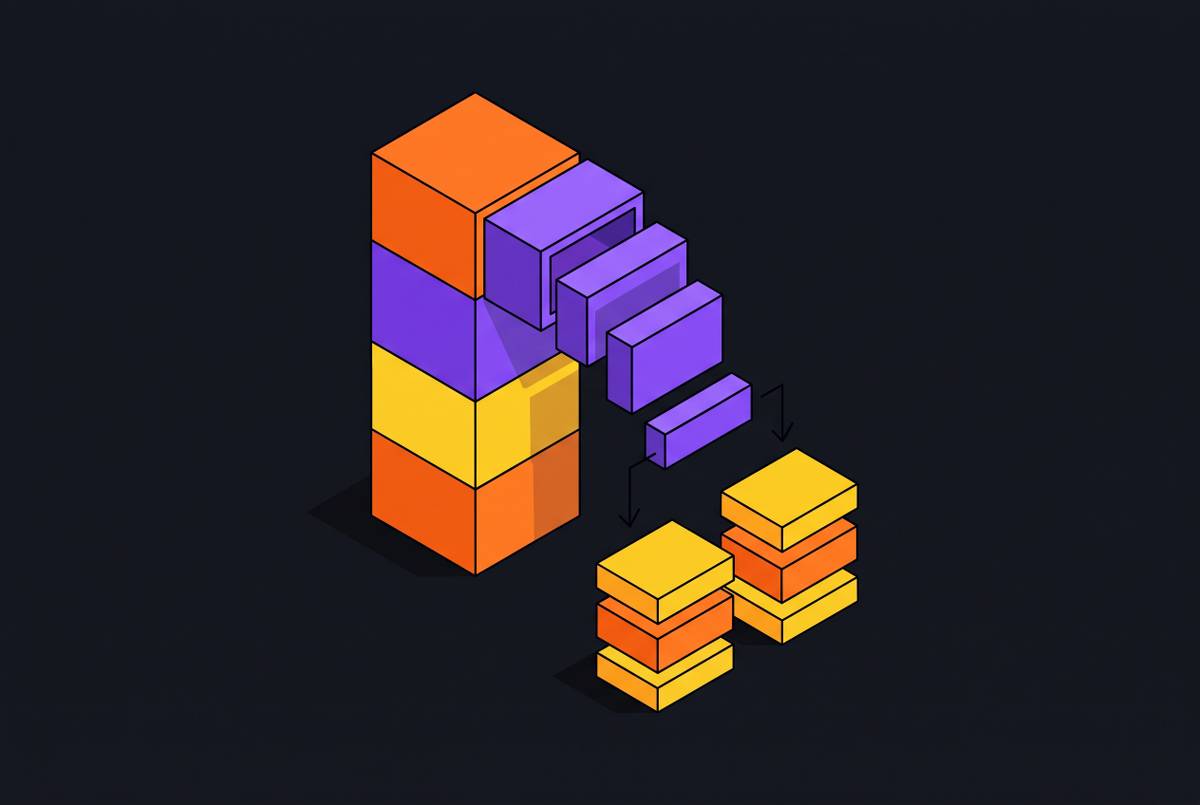
Smaller chunks excel at factoid queries while larger ones catch thematic relationships.
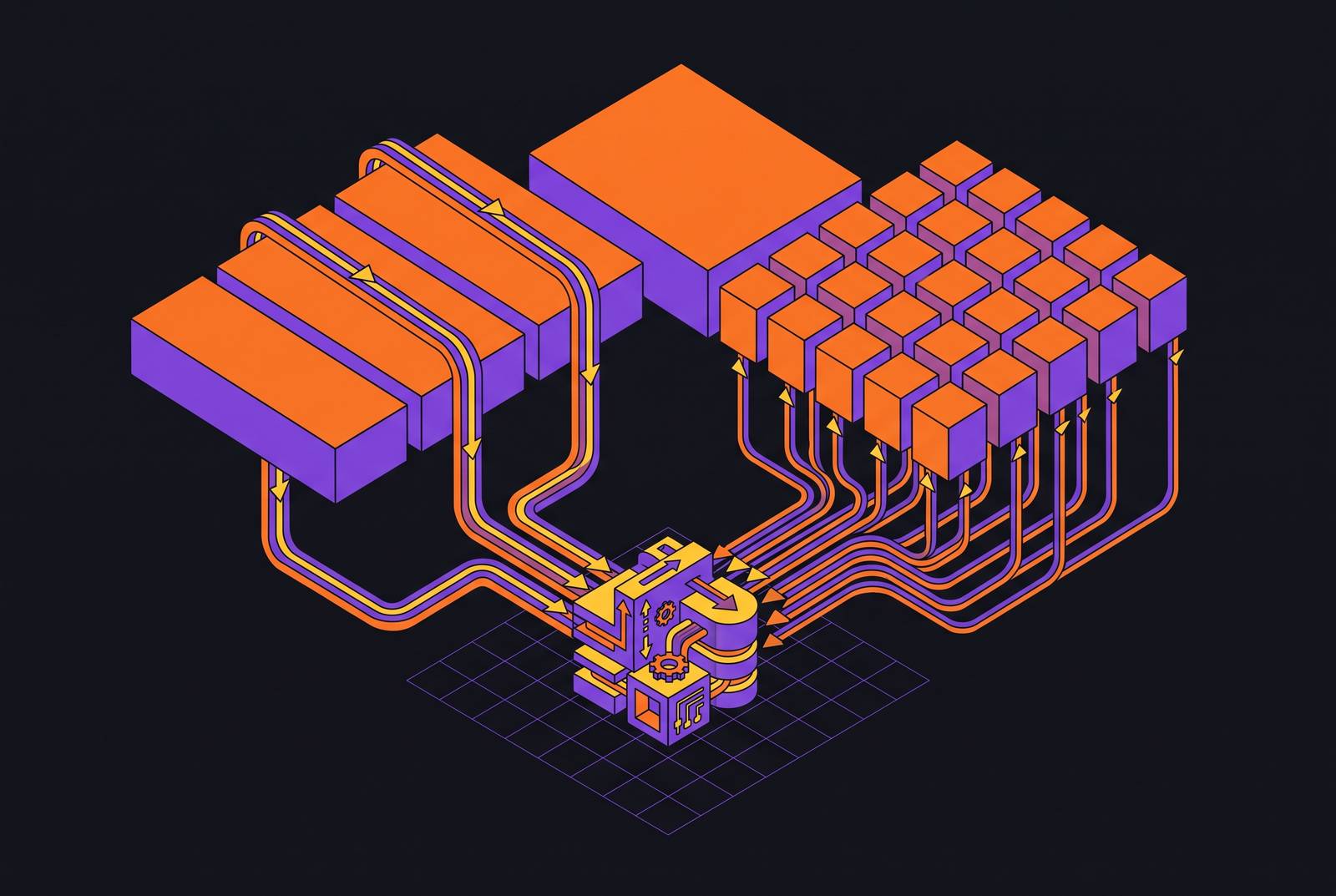
Chunk size looks like a small setting: one number in a text splitter constructor, usually left at whatever the tutorial suggested. In practice, it decides what an embedding model sees, what a retriever can match against, and what a generator gets handed at the end. Most teams never touch that number after copying it from a blog post, and that's the actual failure worth fixing.
LangChain, LlamaIndex, Chroma, Vectara, Cohere, Anthropic, Redis, and Databricks all surface in the chunking and retrieval literature as vendors or frameworks where chunk size configuration directly shapes embedding and retrieval behavior. LangChain and LlamaIndex expose chunk size as a constructor-level parameter in their text splitters and support parent-child retrieval patterns. Chroma published a technical report measuring recall variation across chunking methods. Vectara presented benchmark results at NAACL 2025 showing chunking configuration matters roughly as much as embedding model choice. Cohere's Embed v3 supports multi-granular embeddings, which changes how much chunking strategy matters on top of it. Anthropic's contextual retrieval research demonstrated that prepending positional context before embedding cuts retrieval failure rates by a wide margin. Redis documents the parent-child pattern for RAG pipelines, and Databricks hosts LumberChunker as part of its chunking strategy guidance for production RAG applications.
Here's the structural problem underneath all of this: embeddings are fixed-dimensional. A fixed-dimension vector has to squeeze everything in a chunk into that same fixed space, whether the chunk is one sentence or four pages. Cram in too much, and the vector starts averaging across ideas that have nothing to do with each other. Chunk size shifts which kind of error you're willing to live with, rather than eliminating error outright.
What actually changes in embedding and retrieval as chunk size increases?
Start small. Sentence-level chunks give you an embedding that represents one claim, with nothing else fighting for space inside it. That's strong for fact-lookup queries, where the answer is a single number, name, or date, because the retriever isn't wading through noise to find the signal.
The cost shows up in the index, not the query. More chunks means more vectors, more storage, slower retrieval at scale. A document chunked at sentence level can produce many times more vectors than the same document chunked at a larger size: that's a corresponding multiple of vector comparisons per query.
Then there's the middle range, the band most tutorials call the "sweet spot." That phrase overstates things; it doesn't hold across query types. Even inside this middle band, performance on factoid questions and performance on analytical questions pull in opposite directions. Optimize for one and you pay for it on the other, every time.
Push to the large end, page-level chunks and beyond, and the embedding has to compress several topics into one vector. Recall on broad, thematic queries actually goes up here, since a large chunk is more likely to contain something relevant to a wide question. But precision on specific queries drops, because the vector is now a blend of ideas instead of a clean read on one.
Anyone selling a universal right answer hasn't run the numbers on their own corpus. Chunk size is relative to query type, document structure, and what a given embedding model can hold onto in one pass, full stop.
How query type should drive chunk size expectations
Two archetypes anchor almost every retrieval workload, and mixing them up is the most common design mistake teams make. Factoid queries ask "what is X?" and need a precise, self-contained answer, so smaller chunks win: the retriever matches tightly without dragging in context nobody asked for. Analytical queries ask something closer to "how does X relate to Y?" or "summarize the argument about Z," and these need chunks large enough for the embedding to hold the relationship, not just an isolated fact.
A 2024 benchmark from NVIDIA, run across multiple datasets and query types, showed this split clearly: factoid queries favored smaller chunk ranges, analytical queries needed noticeably larger ones. The optimal size changed by query category. Document type mattered too. Financial and technical documents, which pack meaning densely into short spans, showed different optimal ranges than the general knowledge-graph content tested in the same study.
So the first question when building a retrieval system is what people will actually ask this thing, more than what chunk size to use. A support chatbot answering questions against product docs skews heavily factoid, so smaller chunks make sense. A research assistant summarizing long reports skews analytical and needs larger or hierarchical chunks to catch relationships across paragraphs. Mixed query types can't fully optimize for either without hurting the other, and that's exactly what pushes serious teams toward hierarchical retrieval instead of one flat chunk size.
What benchmarks say about fixed-size vs. semantic chunking
Most tutorials assume semantic chunking has to win, since it splits at meaning boundaries instead of cutting blind at a token count. Reasonable guess. Wrong more often than the pitch suggests, and the benchmarks make that hard to dodge.
A Vectara study presented at NAACL 2025 tested a large number of chunking configurations against a wide range of embedding models and found that chunking configuration mattered about as much as the embedding model choice itself. Sit with that for a second: the splitter you pick can matter as much as the model you're paying for. But the same study found the extra compute cost of semantic chunking wasn't consistently paid back by better retrieval on realistic datasets. Chroma's technical report from July 2024 backs this from another angle, finding real variation in recall across chunking methods, with the size of the gap depending heavily on which metric gets optimized: recall, precision, or overlap with the gold passage.
Here's what semantic chunking actually does, mechanically: it computes embedding similarity between adjacent sentences, then cuts where similarity drops, on the theory that the topic just shifted. Elegant on paper. It also needs an embedding call per sentence during indexing, which is real compute cost, not a rounding error you shrug off at scale.
Fixed-size recursive splitting, by comparison, indexes faster, is easier to reason about, and often lands within a few points of recall against semantic methods on well-structured documents. Default to recursive splitting unless the document gives a specific reason not to; that's what the benchmarks support, even if it's a duller thing to write up. Semantic chunking earns its cost on messy, heterogeneous documents where a fixed split is likely to cut straight through a meaningful unit of meaning. Anywhere cleaner, it's compute spent solving a problem that isn't there. Embedding model choice complicates this further: Cohere's Embed v3, for instance, supports multi-granular embeddings, which changes how much the chunking strategy even matters once it's stacked on top.
The overlap variable and why skipping it is a common mistake
Chunk boundaries are arbitrary. They're cuts through continuous text, and meaning doesn't care where they land. A sentence that closes out an argument might sit at the very top of chunk two, cut off from the three sentences of setup that came before it in chunk one.
Overlap fixes that, and it looks cheap at first glance: adding a small overlap window between chunks can produce a real gain in retrieval precision, at no cost to model complexity. The cost lands in the index instead. Every token inside the overlap window gets stored twice, once in each chunk, so the index grows roughly in proportion to how much overlap you choose. More storage, more vector comparisons per query, slower retrieval at the margins.
A systematic analysis (arXiv:2601.14123) argues against flipping overlap on by default. Measure whether boundary loss is actually hurting retrieval on your own query set first. Paying storage costs for overlap that isn't buying you anything is money burned for nothing, and skipping that measurement step is the real mistake here.
That points to a bigger issue: retrieval and generation don't want the same granularity, and treating them like they do is where a lot of pipelines break. Retrieval wants small, sharp chunks, ideally one clear idea per vector, so the match stays tight. Generation wants surrounding context, so the answer doesn't read like it got cut off mid-thought.
The parent-child pattern solves this head-on. Index small child chunks for retrieval, since these give the embedding model sharp specificity. When a child chunk gets pulled, hand the generator its parent instead: a larger block of surrounding text the model can actually work with. The cost is architectural. Now there's a child index, a parent store, and a mapping between them to maintain, more moving parts than a flat index, and more that can drift out of sync without upkeep.
Mix-of-granularity research out of Shanghai AI Lab and Beihang University in 2024 pushes further still, picking granularity dynamically per query instead of locking it in at index time. But for homogeneous query types over short, well-structured documents, a flat index with one well-chosen chunk size is usually enough. Not every system earns the extra machinery; building parent-child scaffolding for a workload that doesn't need it is wasted engineering time.
Contextual retrieval and late chunking as two ways to give chunks document-level awareness
Here's a failure mode that shows up constantly: a chunk gets retrieved, the match is technically right, and it's still useless. "It" has no referent. "The table above" points at nothing, because the table isn't in this chunk. "As mentioned earlier" connects to a sentence three pages back that never made it into the retrieval window.
Contextual retrieval fixes this at the source. Before a chunk gets embedded, a short summary describing where it sits in the document gets prepended to it, so the resulting vector carries some sense of place instead of floating in isolation. That same prepended context also feeds BM25 indexing, which sharpens keyword-based retrieval of the now-contextualized chunk. Anthropic's research on this found it cut retrieval failure rates by a wide margin. The cost is one LLM call per chunk at indexing time, which adds up fast across a large corpus, though it's a cost paid once if the index doesn't need frequent rebuilding.
Late chunking, from Günther and colleagues in 2024, takes a different route to a similar goal. Instead of splitting text first and embedding each piece on its own, it embeds the whole document at the token level first, so attention spans the entire document before any cuts happen. Chunk boundaries get applied afterward, using mean pooling over the token embeddings inside each chunk window. By the time the split happens, the document's full context has already shaped every token's representation.
These solve different problems, and neither one substitutes for the other. Contextual retrieval helps at retrieval time, making it more likely the right chunk gets pulled in the first place. Late chunking changes what the vector itself encodes, before retrieval even starts. Stack them: late chunking for richer vectors, contextual retrieval for the positional cues keyword search can actually use.
When structure-aware and LLM-driven chunking justify their added complexity
Some documents have real structure: headings, tables, captions, sidebars, nested lists. Slicing by token count ignores all of it and cuts wherever the count runs out, which might land mid-row inside a table. Element-based chunking respects the structure instead: a table becomes one chunk, a section becomes one chunk, regardless of token count. This works well on PDFs with consistent heading structure, on HTML documents, and on code repositories where the AST already defines natural boundaries. It needs a parser that can actually pull that structure out, and that's a far bigger ask for PDFs than for HTML.
LLM-driven chunking goes further still. LumberChunker (Duarte et al., 2024) has the model itself find natural transitions in long narrative text, instead of applying a fixed rule about tokens or headings. It produces the highest quality results on heterogeneous, long-form prose, exactly where neither token counts nor structural markers give you a reliable place to cut. The cost is an LLM call per document during indexing, expensive enough to rule this out for large, frequently updated corpora. It earns its keep on legal filings, long-form reports, and books: content where topic transitions are buried in prose and there's barely any structural scaffolding to lean on instead.
Complexity is worth the price when a document's own structure, or its total lack of one, makes the simpler methods fail in a predictable way. Reaching for LumberChunker on a folder of clean HTML pages is wasted spend, plain and simple. In production, most teams mix strategies by document type rather than picking one method for everything: structure-aware for PDFs, recursive splitting for plain prose, AST-based splitting for code.
How chunking decisions change when retrieval is part of an agent loop
Agentic RAG changes the shape of the problem entirely. A standard pipeline retrieves once and generates once. An agent loop reasons about whether to retrieve at all, what exactly to retrieve, and whether the first pass was even enough before deciding to go again.
Multi-hop retrieval turns chunk size into a moving target instead of a fixed setting. The agent retrieves a chunk, notices a fact is missing, rewrites its query based on that gap, then retrieves again against the new query. Smaller chunks per hop give the agent sharper, more specific signal when it decides how to rewrite the next query. Larger chunks might close out the whole question in fewer hops, but they hand back less surgical information at each step, turning the next query rewrite into a guessing game instead of a precise correction.
Default to smaller chunks in agent loops unless latency per hop is the actual constraint. Precision compounds across hops in a way speed never does; a sloppy chunk on hop one poisons every rewrite that follows it. That's a call to make on purpose, based on what the workload needs, not one to leave sitting at whatever default the text splitter shipped with.