RAG vs. Long-Context LLM Windows for Document QA
Four variables determine whether RAG or long-context windows will cost less and work better.
RAG and long-context windows solve the same problem, pulling answers out of documents, in almost opposite ways. Most teams treat the choice like a coin flip: pick whichever one the vendor pitched last, and move on. That's backwards, and it's costing them money or accuracy or both. The right pick depends on four hard variables: corpus size, how fast the content changes, how much latency a user will sit through, and what query volume does to the bill at the end of the month. Get those four right and the choice mostly makes itself.
What each approach actually does under the hood
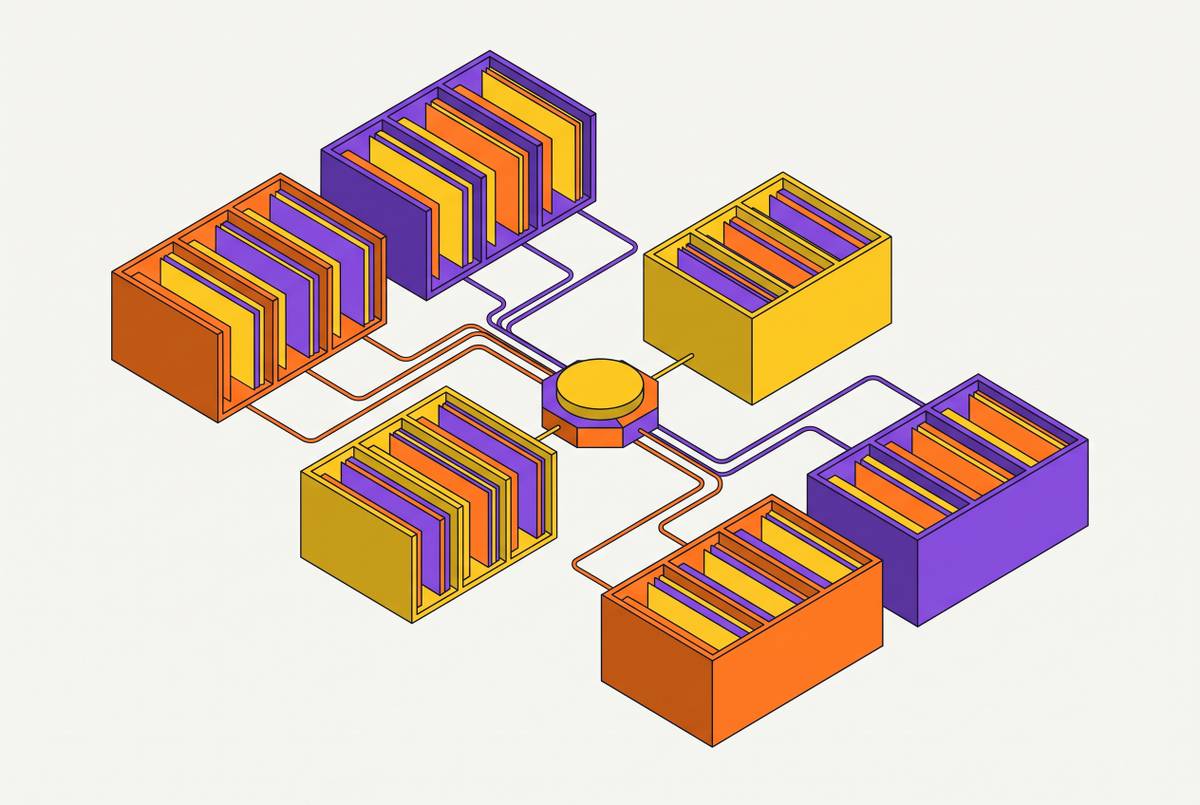
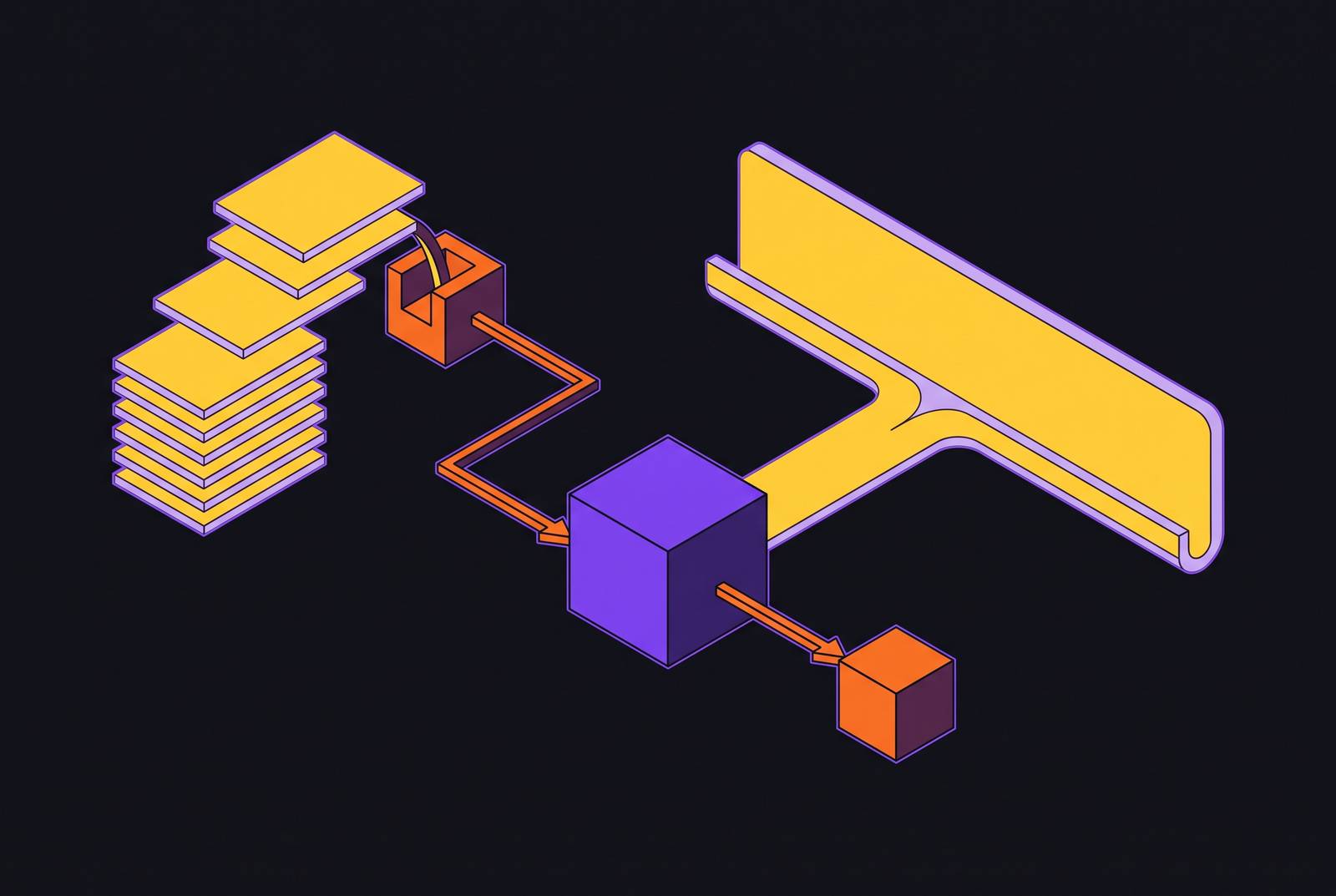
RAG stands for retrieval-augmented generation, and the mechanics are simple to describe even if the tuning isn't. A query comes in, a retrieval step pulls matching chunks from a vector index, those chunks get stuffed into the prompt, and the model answers based on whatever got retrieved. The whole pipeline consists of this.
The parts that actually decide whether it works well are less obvious. Chunk length matters, and so does where the boundaries fall (slice a sentence in half and you've probably broken the fact it contained). Embedding model choice matters too. So does retrieval method: sparse (keyword matching), dense (vector similarity), or some hybrid of the two. Then there's the count: how many chunks you hand the model per query.
Jiang et al. (2024b) and Yu et al. (2024) point the same direction here: longer retrieval units beat shorter ones, and fewer chunks beat more of them. Xu et al. (2024b) found that returning somewhere between 5 and 10 chunks tends to produce the strongest results. Past that, extra chunks mostly add noise, not signal, and the model starts drowning in its own context.
Long-context, or LC, skips all of it. No index, no chunking calls to make, no embedding model to pick. The whole document, or as much of it as fits, goes straight into the prompt. Simplicity is the entire pitch, and it's a real one.
Neither of these is fine-tuning, and that distinction matters more than most vendor pitches let on. Fine-tuning changes the model's weights, retraining it toward a domain or a style. RAG and LC both just inject content into the prompt at the moment of the query. The weights never move. What changes is what the model sees, not what it knows.
On raw QA benchmarks, long-context tends to win. Li et al. (2024b), out of NTU and Fudan, found LC generally beats RAG head-to-head. Li et al. (2025), the LaRA study out of ICML, pushes back on any clean verdict, noting that the better choice depends on the model, the task, and how long the context actually runs. That paper found the better choice depends on conditions, and a hybrid approach called Self-Route closed much of the gap between RAG and LC performance.
For one-off analysis, or anything low-volume, LC wins outright, no argument needed. There's no pipeline to build, no index to maintain, nothing to debug when retrieval quietly hands back the wrong chunk. Prototyping gets faster. A task run twice a month doesn't need infrastructure at all.
Whole-codebase Q&A works the same way. A model that sees an entire repo, cross-file dependencies intact, reasons better than one working off retrieved snippets that happen to match a keyword. The full context, in the literal sense, carries real value there.
But LC hits a wall RAG never does. A knowledge base running into the thousands of documents blows past even a million-token window; at some point the corpus just doesn't fit, no matter how generous the window gets. And LC's token cost lands per query, not per index build. Push real query volume through a million-token prompt and the economics fall apart fast.
Where RAG earns its place and where it struggles
RAG wins the dialogue-based and general question pattern outright, and this is the case most enterprise document QA products are actually built around. The LaRA study noted that the better choice depends on the task type, and dialogue-based patterns suit RAG's incremental retrieval well. Someone asks a follow-up, then another, and RAG's incremental retrieval fits that shape far better than re-feeding a giant context window on every single turn.
Cost is the other clear win, and it isn't close. Li et al. (2024) called RAG "undoubtedly far more cost-efficient," and the logic holds up: only the relevant chunks enter the prompt, so token counts stay low no matter how big the underlying corpus gets. A large knowledge base and a small one cost similarly per query, because retrieval sets the token bill, not corpus size.
Freshness is built into the architecture too. The index updates on its own schedule, independent of the model. Re-crawl as often as the content demands, and the staleness window shrinks without retraining or reloading anything. Scalability follows the same logic: adding documents grows the index, not the per-query token count.
There's an audit trail as well. Every answer traces back to specific retrieved chunks, which matters in compliance-heavy document QA where "the model said so" isn't good enough on its own.
None of that makes RAG easy. Retrieval fails silently, a part people underestimate most. Bad chunking, a weak embedding model, a mismatch between how a user phrases a question and how the source text was actually written: any of these can make the system miss the right passage entirely. No error message fires. The system just delivers a wrong or incomplete answer with total confidence, and nobody downstream knows to doubt it.
Keeping the index fresh is ongoing labor, not a one-time build. Crawling, re-chunking, re-embedding: that's a maintenance loop running forever, not a checkbox ticked once. A 2025 review from ragflow.io caught the mood exactly: enterprises say they can't live without RAG, and stay unsatisfied with it at the same time. Getting stable, accurate answers on complex queries takes real tuning work, and that work piles up in total cost of ownership in ways teams don't see coming until they're deep in it.
The staleness dimension that changes the calculus for live document QA
Staleness is several problems at once. It's two, and mixing them up leads straight to the wrong fix.
The first is a coverage gap: a page that didn't exist when the crawl ran simply isn't in the index. No retrieval trick recovers it, because there's nothing there to retrieve. The second is drift, where a document got indexed, the source has since changed, and the embedding still points at the old text. Drift is the more dangerous of the two, because the system keeps answering confidently from something that used to be true, and nothing in the pipeline flags the contradiction.
The FreshStack benchmark, presented at NeurIPS 2025, examined how retrieval freshness affects performance on time-sensitive queries. That makes freshness a measurable quality metric, not just an architectural preference two engineers argue about in a design review.
One fix here is live-web RAG: find sources through a search API, fetch and clean the pages at the moment the query lands, and ground the answer in citations pulled from that fresh fetch. The freshness ceiling becomes right now, instead of whenever the last crawl happened to finish.
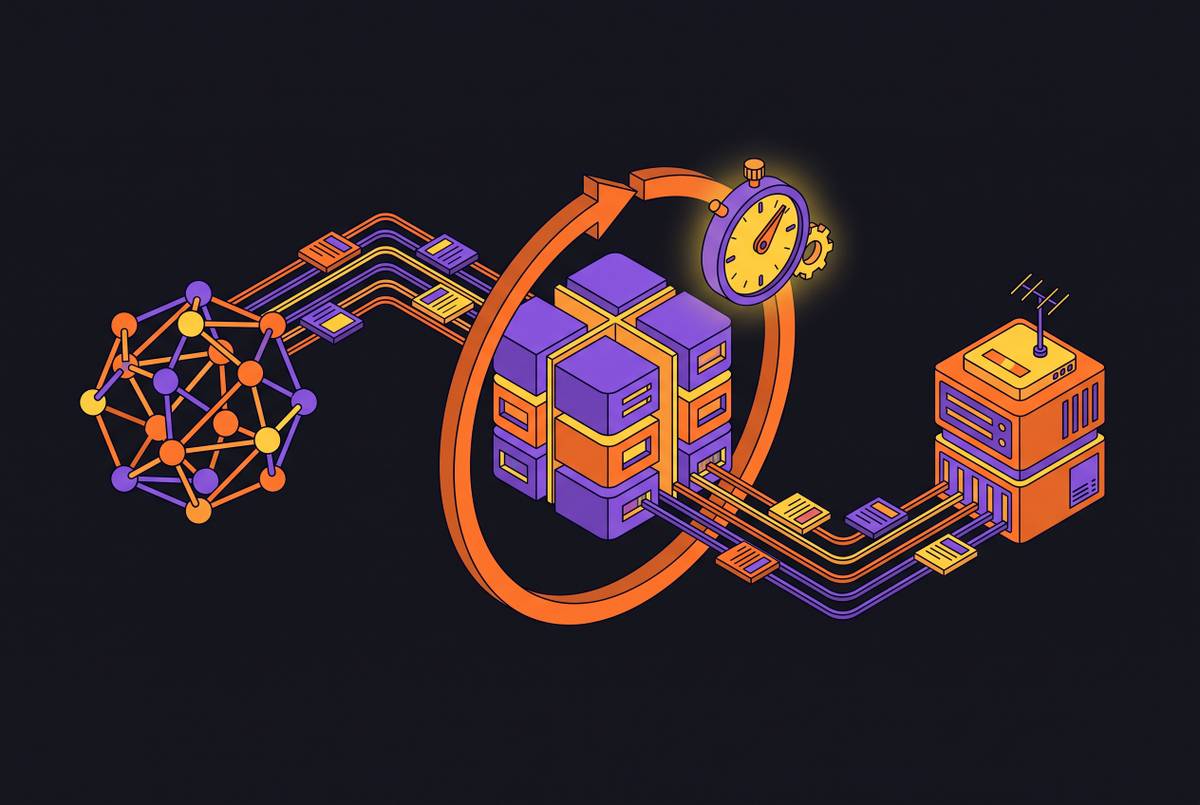
That costs something, obviously. Fetching live adds latency and per-query expense a cached index doesn't carry. A cached index answers fast but drifts further from the truth the longer it sits unrefreshed. Most production systems land on a hybrid: live fetch reserved for time-sensitive queries, cached chunks under a freshness time-to-live for anything more stable. Stock prices need live fetch. A company's founding date doesn't, and treating both the same way wastes money on one end or accuracy on the other.
A concrete decision framework across four variables
Four things decide the call in practice: corpus size, freshness needs, latency tolerance, and cost per query.
A corpus small enough to fit inside a context window, paired with static content and low query volume, tips toward long-context. Nothing about that setup benefits from carrying an index around. Flip nearly any one of those variables, and the balance moves fast. A corpus in the thousands of documents forces RAG by simple necessity: no context window absorbs that much text. High query volume forces RAG on cost grounds alone, since LC bills per query on the full token count, every single time, forever. A hard freshness requirement, content changing daily or hourly, pushes toward RAG's independently updatable index, or toward live-fetch RAG if the staleness tolerance is measured in minutes rather than days.
Dialogue-based Q&A and general lookups against a large knowledge base favor RAG almost by default. That's a pattern the LaRA study identified as suiting RAG's incremental retrieval well, and it happens to describe most customer support and internal-knowledge-base products already running in production right now.
How web data pipelines connect to document QA architecture in practice
A lot of document QA is, underneath, web QA wearing a different name. Competitor knowledge bases, public documentation, regulatory filings, news coverage: all of it lives on the open web and keeps shifting under whoever's trying to track it.
The RAG version runs a continuous or triggered crawl, chunks the new content, embeds it, indexes it, and retrieves at query time. More moving parts, no argument there, but freshness stays controllable because someone owns the crawl schedule and can tighten it whenever the content demands.
Live-fetch RAG skips the index step entirely. Fetch at query time, convert the page into something the model can read, answer from what just came back. Nothing sits around long enough to go stale, but every query now carries the latency of a live crawl on top of everything else.
Either path carries a maintenance cost that predates all the automated-quality-checking talk floating around lately. A Kadoa estimate from 2026 put the traditional split at roughly 20% of engineering time building scrapers and 80% maintaining them, chasing site redesigns and layout tweaks that quietly break extraction. That burden sits on top of whichever document QA architecture gets picked; it doesn't disappear because the QA layer got smarter.
What has changed is how well extraction survives a page's structure shifting under it. McGill University researchers, in 2025, found automated extraction methods held 98.4% accuracy even after page layouts changed. For document QA, that's the difference between a system that stays trustworthy and one that doesn't. A retrieval system fed corrupted or malformed text degrades answer quality silently, the same way bad chunking does, and by the time anyone notices, the wrong answers already went out the door.
Applying the framework: three document QA scenarios with different answers
Run the framework against three real setups and the right call changes each time. That's the point of having a framework instead of a rule.
Scenario 1: a customer support bot over a product knowledge base that updates weekly. Freshness gets handled fine either way through a weekly re-crawl, so that variable isn't what decides this one. Query volume decides it. High-traffic support bots answer thousands of queries a day, and RAG's per-query cost, driven by retrieved chunks instead of a full context reload, is the version of this that stays affordable at scale. Run this one on LC and the token bill turns ugly within a month.
Scenario 2: competitive intelligence tracking a market that moves daily. This needs a web crawl running continuously, not on a fixed weekly schedule, because catching changes fast is the entire point of the product. An extraction layer built for structural resilience cuts down the maintenance load of keeping that index accurate, and it matters more here than in Scenario 1: stale competitive intel isn't just unhelpful, it actively misleads whoever's reading the report.
Scenario 3: legal document review over a fixed set of contracts. Dozens of long contracts, nothing new arriving mid-review, and the real job is reasoning across all of them at once, cross-referencing one clause against another. Bounded corpus, no freshness pressure during the review window. This is close to the clearest long-context case in the whole framework. The documents likely fit inside a large context window, there's no query-volume problem since review happens in bursts rather than a live stream, and LC's ability to hold entire documents in context at once, keeping cross-document relationships intact, applies directly here. RAG's chunk-based retrieval risks fragmenting a contract's logic at exactly the moment cross-document reasoning is the entire task.
Three setups, three different answers, and none of them wrong. What looks like a single verdict is really a series of judgments stacked on top of each other. Feed the framework different inputs, and it hands back a different answer every time, which is exactly what a decision framework is supposed to do.