Incremental Extraction for High-Velocity Web Data Sources
Fingerprint extracted values instead of full pages to skip wasteful re-crawls.
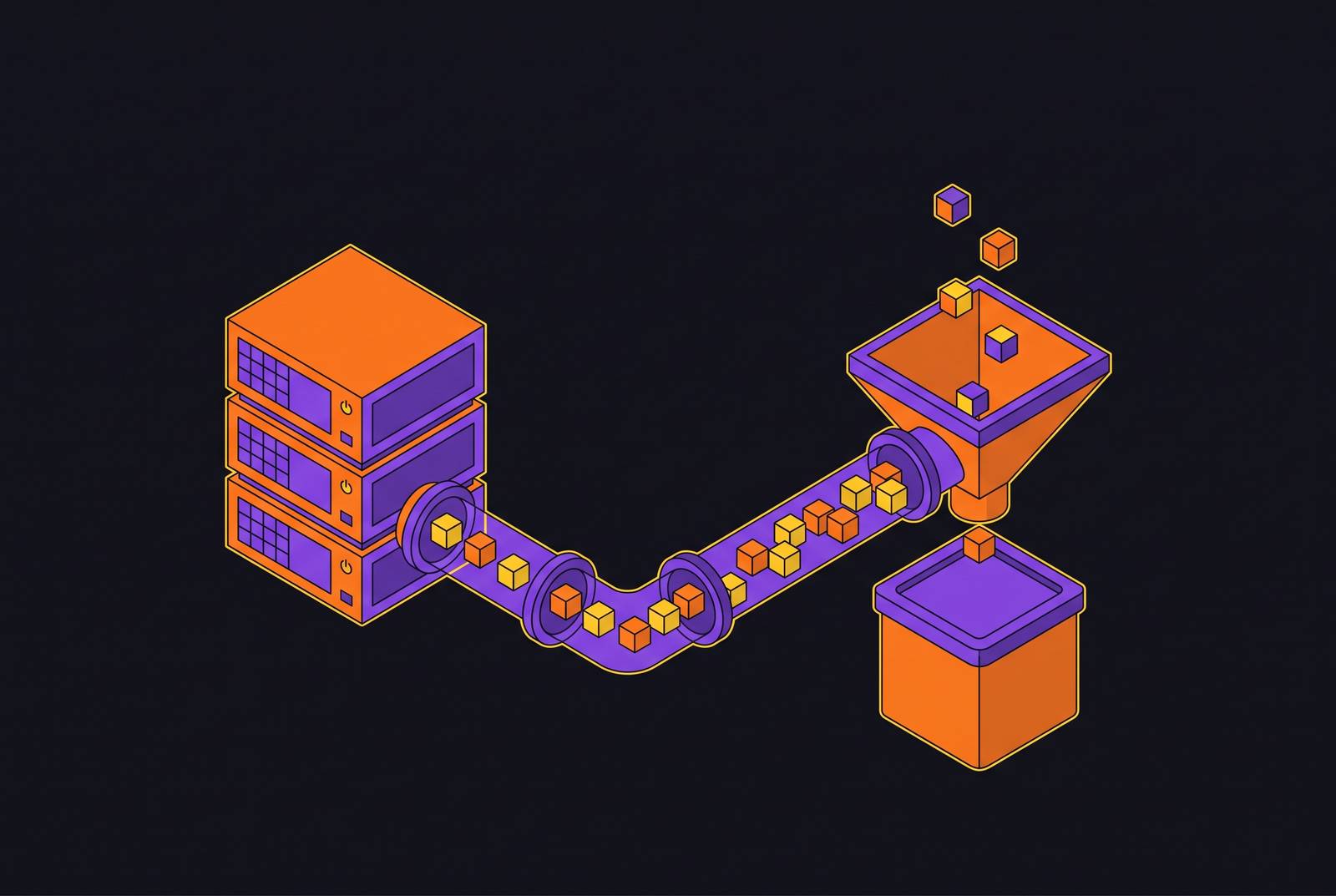
A security team running a CVE feed across a few hundred vendor pages does not need to re-read every byte of every page every hour. But that is what a full re-crawl does. It treats every page as a blank slate each time it runs. Compute, bandwidth, and downstream LLM processing all get spent on pages that look exactly like they did an hour ago.
Why full re-crawls fail on high-velocity web sources
Full re-crawls fail on fast-moving sources because they are built around the wrong unit of work. The waste compounds across a feed of CVEs, library changelogs, or regulatory filings, where most of the content on most runs has not changed.
The downstream cost lands hardest in AI pipelines. An analysis of 2026 scraping patterns from Kadoa frames the deeper issue well: pulling data off a page is a solved problem at this point. What actually breaks production pipelines is everything around it, keeping extraction working when a site changes, scaling it to thousands of sources, and knowing whether the data coming out the other end is even correct.
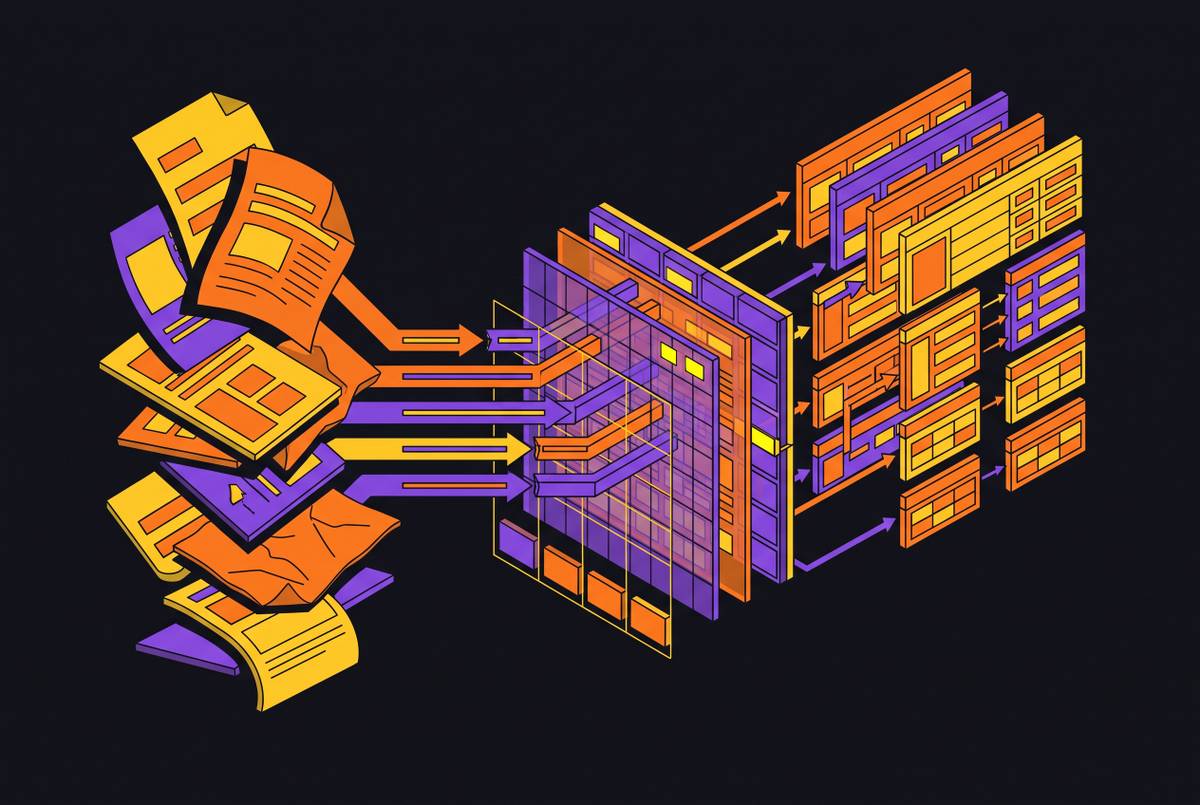
Full re-crawls also make the noise problem worse, not better. Running a full-page diff against any of that flags all of it as a change, even though nothing that matters moved.
What incremental extraction means as an architecture
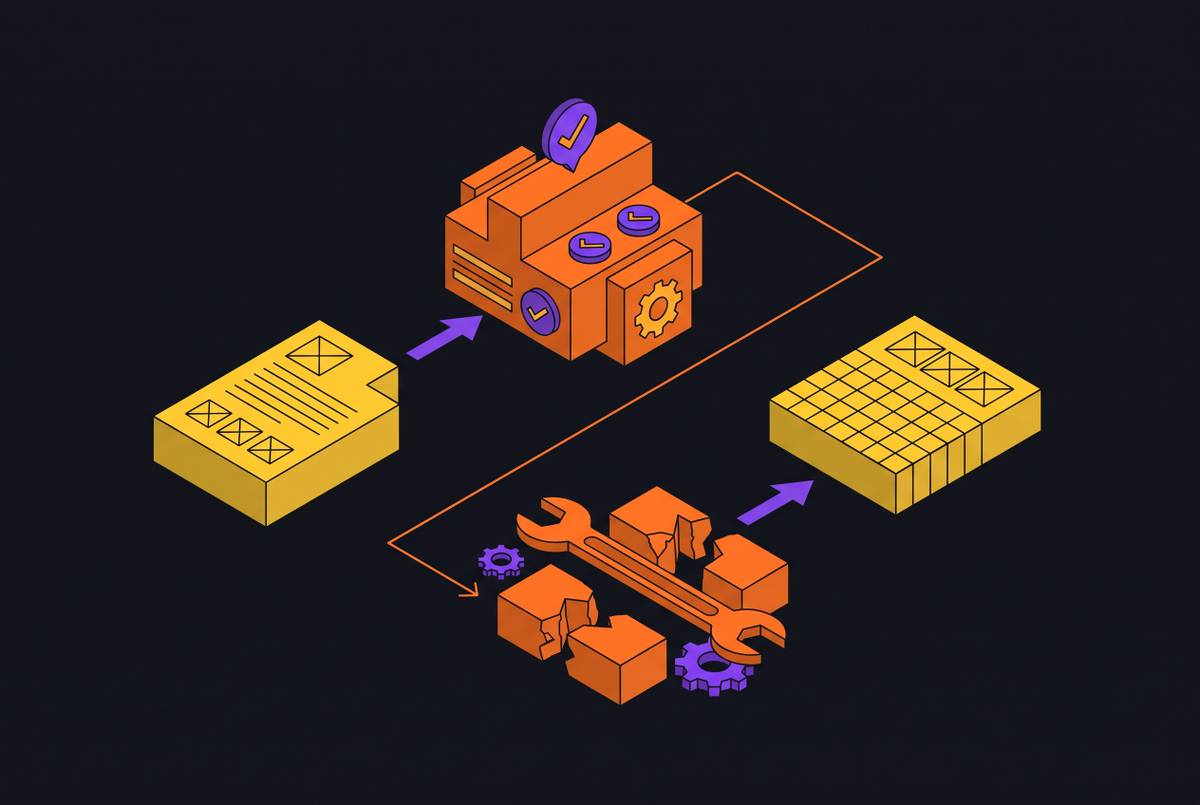
Incremental extraction is not something you turn on with a setting; it is a different way of building the pipeline, with three working parts: a signal that tells you something changed, a step that pulls only that change, and a structured diff that passes just the changed fields downstream. Full extraction re-ingests everything on every run, regardless of what changed. Incremental extraction pulls only what's different since the last run.
Getting that change-detection signal can happen two ways. The decision that matters most here is what gets fingerprinted. Fingerprint the extracted field values instead; a CSS class rename or a rotating testimonial doesn't register as a change, because the actual values underneath are the same.
Hevo's approach to database extraction shows this same logic working a layer down the stack. Stitch, per Hevo's description, is built specifically for incremental extraction on structured data sources, and Hevo itself uses change data capture to pull incremental updates out of operational systems automatically, relying on batch-based CDC on its standard plans. The same underlying idea carries over to the web: don't pull everything, pull what moved.
How change detection feeds live AI pipelines without rebuilding the index
A structured diff is exactly the right thing to hand to a RAG pipeline.
Classic RAG has a structural weakness that incremental extraction directly addresses: it answers questions out of a corpus someone built and is maintaining on their own schedule. That gives engineers a research basis for treating freshness as a real technical requirement for the pipeline, not a nice-to-have feature a product team asked for.
Two patterns keep an index current without forcing a full re-crawl. The other is a TTL-based cache for live retrieval: fetched chunks get stored with a freshness deadline attached, so a repeated or similar query reuses the cached result, avoiding a fresh fetch every time. That caching layer is what keeps live web retrieval affordable once query volume climbs.
Why field-level monitoring beats page-level diffing for noisy sources
The hardest problem in change detection for fast-moving sources is not spotting that something changed. Plenty of tools can tell you a page is different from yesterday. The hard part is telling a change that matters apart from cosmetic churn that shouldn't trigger anything downstream.
Full-page diffs get fooled constantly. None of these represent a change a downstream system should care about, yet a diff run against the full page catches every one of them.
Field-level monitoring solves this by changing what gets compared. A new product announcement does.
This is also where the scraping layer and the AI pipeline actually connect, and getting that schema right is its own design problem to work through next.
Schema design choices that determine what incremental extraction can and cannot catch
A schema is not something to define once during setup and forget about. For high-velocity sources, the schema decides, permanently, which changes the pipeline will ever be able to see and which ones it will quietly miss for as long as it runs.
There's a real tension to manage here. For price and inventory monitoring, the schema needs the value itself, its currency or unit, and a timestamp if the source provides one. A schema that only captures a price as a float will miss a currency change entirely, and it will treat the price field going to "unavailable" as just another missing number.
CVE and security advisory feeds need severity fields, affected version ranges, and patch status built into the schema from the start. Regulatory and compliance sources need the effective date and the version or revision identifier captured as fields separate from the body text, because diffing against the text alone misses a date amendment, and a date amendment can carry the same legal weight as a substantive rewrite of the rule itself.
OpenAI's Structured Outputs feature, which uses JSON Schema, guarantees that the model's response matches the schema exactly, so a required field never gets dropped and an enum value never gets hallucinated into something invalid. When a source adds a field or renames one, the extraction schema has to get updated before the next run, or the pipeline will drop that new data without telling anyone. That's the incremental-extraction version of a scraper quietly breaking because a class name changed.
LLM-based extraction versus selector-based extraction for incremental use cases
Choosing between LLM-based extraction and selector-based extraction for an incremental pipeline comes down to balancing cost, accuracy, and resilience against each other. The right answer depends on how much volume a source produces and how often it actually changes.
Selector-based extraction, built on rule-based matching rules, is fast, deterministic, and cheap to run at scale, since there's no inference cost per page. Its weakness is structural: it breaks the moment a site redesigns or renames a class, and fixing it means a person has to go in and update the selectors by hand. That makes it the right fit for high-volume, cost-sensitive pipelines running against sources that are either fairly stable or update often enough that paying for LLM inference on every page would be too expensive to sustain.
LLM-based extraction takes the opposite trade-off. The cost matters: every page processed this way adds inference cost and runs slower than a selector pull. That makes LLM-based extraction the better fit for sources that redesign frequently, for one-off or ad-hoc extraction jobs, or for layouts varied enough that maintaining selectors by hand would cost more engineering time than paying for inference.
The strongest production pattern uses both in sequence. Vision-based extraction, running a screenshot through a vision model, is slower and more expensive than either approach, and it serves best as a verification layer for unusually complex layouts or as a last resort when the HTML itself doesn't give you enough to work with, rather than as the main engine behind a high-volume incremental pipeline.
Where a managed extraction API fits into an incremental architecture
Building an incremental extraction stack from the ground up means owning proxy rotation, browser orchestration, anti-bot handling, schema management, change detection, and diff formatting, all at once.
The maintenance cost recurs continuously, appearing every time a source site changes. Kadoa's 2026 analysis describes one customer spending 40% of their data engineering time not building new scrapers but fixing ones that had already broken, because something changed on a source site nearly every week: a redesign, a renamed class, a new cookie banner appearing out of nowhere.
A managed extraction API earns its place in an incremental architecture by handling that maintenance burden and giving the pipeline a few specific things in return. It should convert a URL into clean text or structured output in a single call, cutting out the cleanup and parsing a team would otherwise write and maintain by hand. It should support schema-driven extraction, where a developer defines a JSON schema and gets field-level output back, so field-level diffing is possible without writing a custom parser for every source. And it should offer freshness guarantees or TTL controls on responses, so the pipeline can tell a cached result apart from a fresh, live fetch.
Scrappey's 2026 developer guide points at the same underlying shift: platforms that handle proxy management, browser rendering, session handling, and retries behind the scenes let a developer get usable data back from a single API call, and that materially cuts down how long a data project takes to ship. The strongest objection to this approach is fair: trading an in-house maintenance burden for a dependency on an outside vendor carries its own reliability and cost risk. That trade-off works out well when the API returns schema-driven structured output, and when a team's real value sits in its pipeline logic.
Applying incremental extraction to the four highest-velocity source categories
The pattern changes shape depending on the source, because the signal that matters, the schema needed to catch it, and the staleness a pipeline can tolerate are all different across prices, CVEs, changelogs, and regulations. There's no single universal setup that covers all four well.
E-commerce prices and inventory change independently and often, so the schema needs both as typed values, a float for price and a boolean or enum for availability, plus a timestamp if the source provides one. Selector-based or code-generated extraction suits known, stable sources well; LLM-based extraction fits better for sources that redesign often.
Security CVEs and advisories need a schema built around severity rating, affected version ranges, and patch or fix status, since a change to the CVE's description text rarely matters operationally while a jump in severity from medium to critical matters a great deal. This is one category where API-side signals do most of the work: the NVD exposes lastModified timestamps on every updated record, supports lastModStartDate and lastModEndDate filters for incremental syncing, and runs a separate CVE history feed for change-log entries. Use those before falling back to page-level detection.
Library and package changelogs center on the new version number and release date, with breaking-change flags and deprecation notices as the next most valuable fields to track. Noise risk runs low, since changelog pages tend to be structured and only change on release, making this category the most straightforward once the schema is set up correctly.
Regulations and compliance documents need effective date, version or revision identifier, and section-level amendments tracked as the fields that matter, since body text changes have to be diffed at the section level rather than across the whole document to produce anything usable. This category often calls for a hybrid approach: a scheduled crawl of official publication pages to catch new documents, followed by a section-level diff against the prior version to pin down what changed.
What AI-native change detection adds beyond scheduled diffing
Scheduled field-level diffing is reliable for quantitative change: a price moves, a version number increments, the diff catches it cleanly. It falls short on qualitative change that needs some interpretation to notice at all, and that's the gap AI-native change detection is built to close.
A few kinds of change won't appear in a structured field, no matter how well the schema is designed. The structured JSON diff this process produces can feed straight into a RAG pipeline, and the diff itself becomes the unit the system retrieves and reasons over.
A further frontier is predictive alerting: a system that learns the pattern in a source's history of changes and flags a likely price increase or policy shift before it happens, based on what that source has done before. Kadoa's analysis offers a useful picture of what semantic monitoring enables in market research: when a competitor redesigns a site, the scraper adapts to the new layout; when a new product category gets added, the schema extends to capture it; and work that used to mean a quarterly manual audit turns into something continuously monitored instead.
Grounding a system in live web data does not by itself guarantee the data is correct. A citation is a link back to a source, not proof that whatever got extracted from it is accurate. Production systems built on top of this need a validation layer that checks extracted values against expected types and ranges before anything downstream acts on them. AI-native detection works best as a complement to field-level schema monitoring, catching what a fixed schema can't see, not as a replacement for the structured discipline schema monitoring provides.
How to decide between incremental extraction, live retrieval, and a hybrid at design time
No single pattern, indexed incremental extraction, live retrieval at query time, or a hybrid of the two, wins out across every high-velocity source. The right choice follows from how often the source actually updates, how much latency the pipeline can tolerate, and how much staleness is acceptable for whatever's consuming the data downstream.
Live retrieval at query time fits better when a source moves faster than any indexing schedule could reasonably keep up with, live price feeds and breaking CVEs are the clear cases, and when the query itself demands the current state. The honest trade-off is that live retrieval takes longer than pulling from a vector store and adds a cost to every fetch, so a TTL caching layer isn't optional if the system needs to run at any real scale.
At design time, a few questions settle the choice. And what does query volume look like, since high volume favors indexed retrieval with incremental upserts while low volume can absorb the cost of live retrieval without much strain?
Whichever pattern fits, the extraction layer underneath it should be one well-designed API instead of a patchwork of scrapers and scripts built up over time. That decision belongs to the pipeline's architecture. Keeping the extraction infrastructure running should not be the team's engineering problem to carry.