Wiring a Web Scraping API Into an AI Agent as a Reliable Tool Call
Design your fetch layer first to avoid silent failures downstream in agent reasoning.
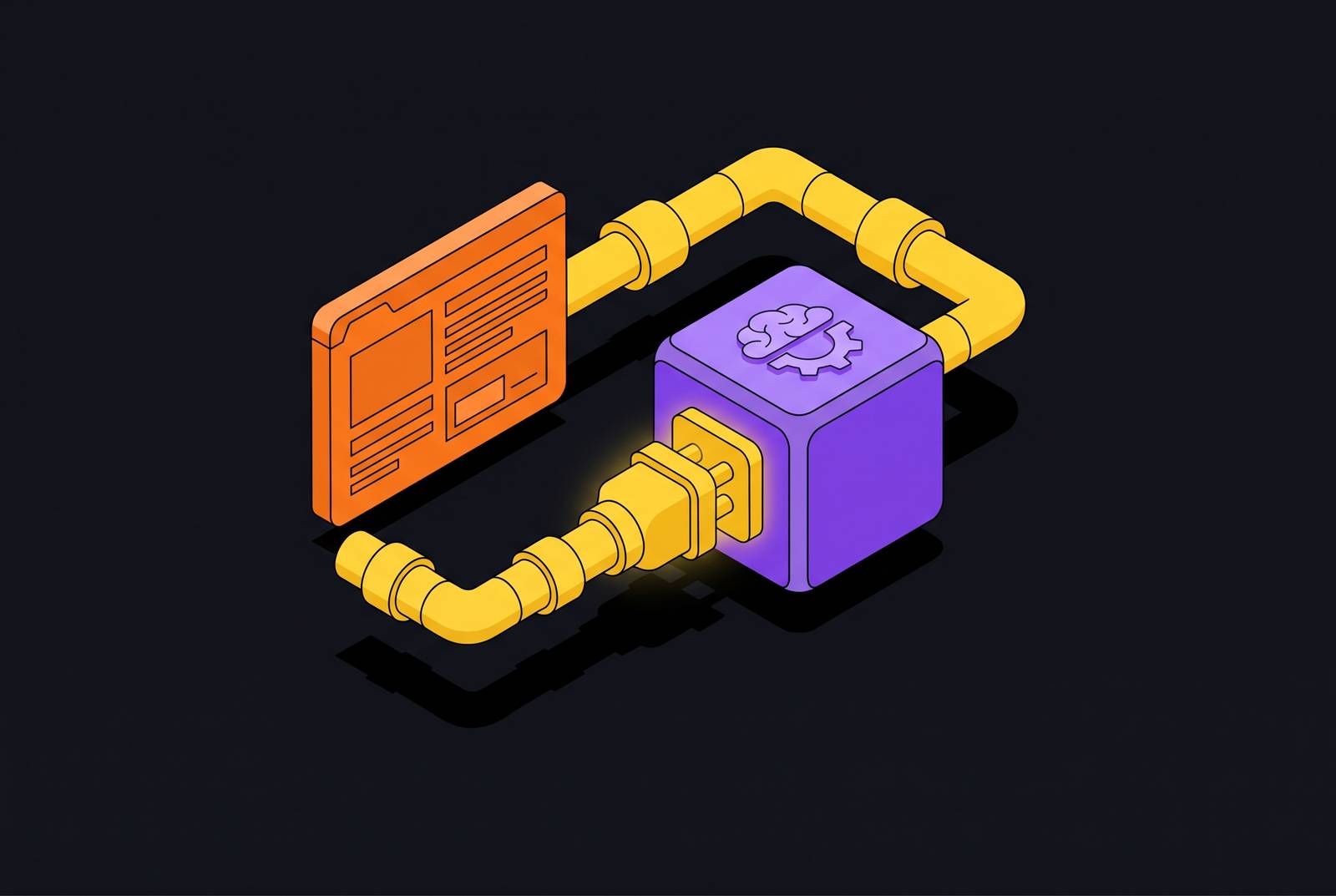
A web scraping API for AI agents and LLM pipelines should return clean Markdown or schema-driven JSON, handle the target site's blocking and rendering requirements, and expose typed tool calls. Wiring it into an agent is an architectural decision. If the fetch layer returns live content, the model reasons over it, but if it returns a challenge screen, the model confidently acts on that screen.
Why the fetch layer is the real architectural decision in an agent stack
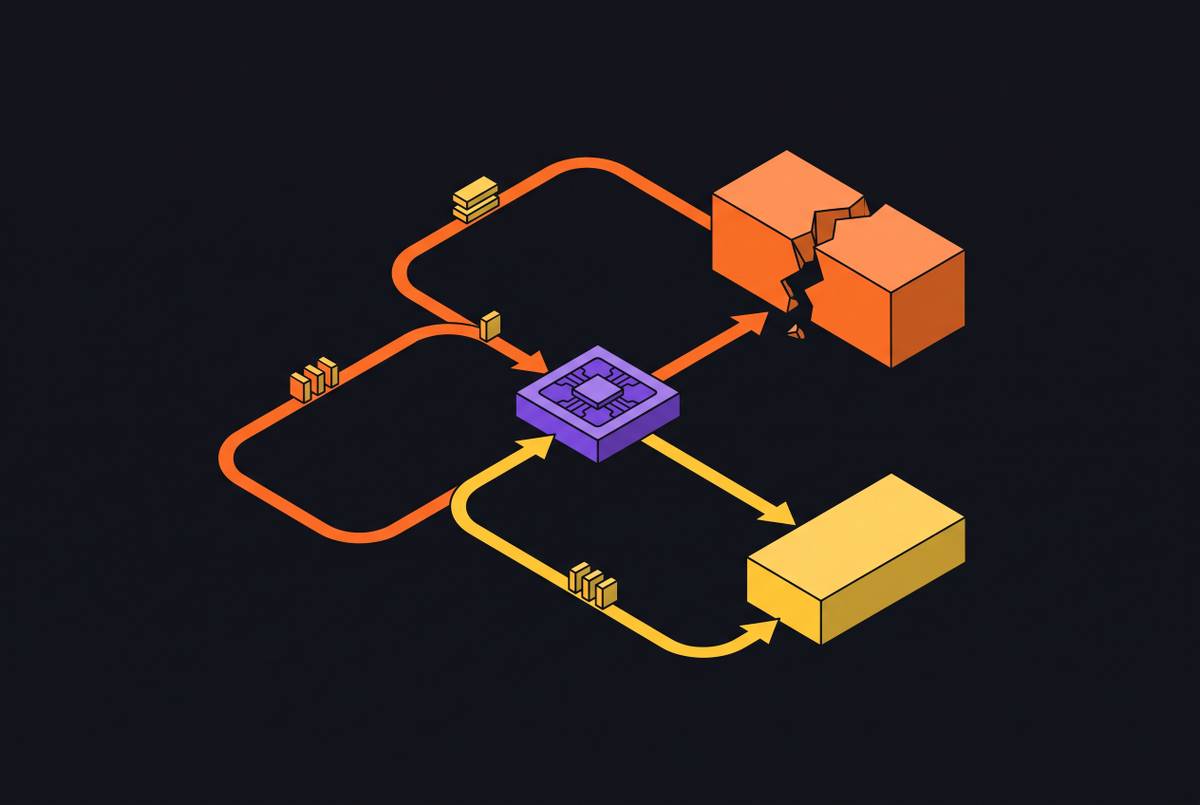
An agent calls a fetch tool and receives a Cloudflare interstitial with an HTTP 200 response. The tool reports success. The agent then passes the CAPTCHA screen to the model as though it were a product page and tries to extract product data. Nothing in the successful status code tells it that the observation is wrong.
That failure starts before the model reasons. An agent's loop is observe, plan, then act, but its view of the web is whatever the tool returns. If observation fails without a warning, the mistake looks like bad reasoning even though it starts before the model reasons. Output format, anti-bot handling, extraction schemas, and session persistence therefore belong in the architecture, rather than in a cleanup task after the agent is built.
The four ways an agent fetch layer breaks on live sites
Anti-bot blocking rejects the visitor. Cloudflare, Akamai, and DataDome assess IP reputation, TLS fingerprint, user-agent string, and browser behavior, while cloud-function IP ranges are often pre-blocked. JavaScript rendering creates a different problem. React and Next.js pages can return an empty HTML shell on initial load, so a plain fetch misses the documentation, pricing, or listings that appear after rendering. The agent may conclude that the information does not exist.
A model-generated CSS path is a guess, and DOM changes can make a once-useful selector stale, producing zero results with unwarranted confidence. Session loss is the fourth failure. An agent may authenticate at the start, then lose access because its cookie expires or its proxy IP rotates while it reasons between calls. A scraper's job may take seconds, but an agent's plan can span minutes, and repeated logins can trip fraud detection.
These are separate faults with separate causes. Treating all of them as a generic fetch failure hides the distinction between blocked access, missing rendering, failed extraction, and lost identity. Unbounded retries then compound the damage, adding repeated fetch costs to tokens spent reading noise.
Which scraping APIs return LLM-ready Markdown rather than raw HTML?
Scrapfly Web Scraping API returns LLM-ready Markdown, while Crawl4AI provides Markdown-first crawling. With that output, the agent avoids a raw page full of navigation chrome, cookie banners, and tracking scripts. Without it, the model spends tokens reading things that have nothing to do with the task, or the team has to keep a parser working between the scraper and the agent.
Markdown also gives retrieval-augmented generation, or RAG, a useful document structure. Heading hierarchies provide natural split points for chunking, which affects what downstream retrieval can find. A clean document is therefore more than a cheaper prompt. It is an input contract shared by the fetching, chunking, and reasoning stages. When an API returns only HTML, the cost of producing that contract has not disappeared.
When a simple read-only fetch is enough and when it is not
The cheapest viable route should come first. When a site has an official API or XHR JSON, the fetch layer can skip page extraction altogether, and it can also try embedded JSON before browser automation. For page fetches, static HTTP works for plain HTML, headless rendering works for content that needs JavaScript, and a stealth browser with anti-bot handling and proxy rotation works for protected targets. Escalation follows failure. Using a full browser for every request wastes resources, as does expecting plain HTTP to work on every site.
Reading and acting also need different tools. A scraping API fits a read-only request, while login, form submission, and navigation can require a browser agent. That distinction keeps browser interaction from becoming the default merely because the caller is an AI agent.
Timing determines the other major choice. Batch ingestion gives documentation sites, product catalogs, and research corpora room for retries, validation, and deduplication before a live request arrives. A live tool call happens while the agent is reasoning, when it picks a URL and needs what is on the page now before it can decide what to do next. The fetch strategy must fit that dependency and the site's technical complexity.
Structured JSON extraction and when to use schema-driven output instead of Markdown
Markdown suits reading, but typed fields need a schema. When the result needs prices, product fields, or contact records, developer-defined JSON cuts out a separate parsing step between the fetch and the model. It can replace Markdown when the fields are the whole task, or supplement it when the agent also needs the surrounding text. The return type follows the work. Asking the model to rediscover a stable field structure on every call adds a responsibility the fetch layer can already handle.
Extraction mode then depends on page predictability. CSS and XPath templates fit stable layouts, offering low-cost, deterministic extraction. LLM prompt extraction works for defined fields on pages with different layouts, though it costs more tokens. Auto models reduce custom maintenance for common page types such as products, reviews, and listings. A schema alone does not solve access, though, so structured extraction still depends on JavaScript rendering with suitable wait conditions, anti-bot handling, proxy management, and persistent sessions where authentication is required.
How MCP changes agent-tool integration for scraping
The invocation contract is separate from the return format. A REST endpoint can return excellent Markdown and still need someone to write a wrapper that teaches each agent framework how to call it. MCP exposes discoverable tools with typed parameter schemas instead. The agent can enumerate the scraper's capabilities at runtime and form calls against those definitions, rather than depend on a bespoke function for every endpoint.
Typed inputs make the intended arguments explicit. That avoids the guesswork of loosely typed string-in, string-out interfaces, where invented parameter names can produce silent failures. Typed outputs and structured errors also give the agent signals it can use for correction and fallback. An opaque failure offers no such path.
Matching the fetch layer to the agent's actual job
The selection rule is to pick by job. A read-only agent facing JavaScript and anti-bot protection can use Scrapfly Web Scraping API with render_js and unblocker enabled to receive Markdown. Its access surfaces include an MCP server, Agent Skills, and a CLI. For RAG ingestion, Scrapfly maps the job to its Crawler API rather than treating a corpus crawl as a series of unrelated live reads.
Typed extraction calls for a different capability. Scrapfly AI Extraction API supports plain-English field descriptions through LLM prompts, CSS and XPath templates for predictable pages, and auto-detection for products, reviews, and listings. This separates the choice of fields from the agent's reasoning task. The appropriate mode depends on whether the page structure is stable enough to template.
For MCP-native clients, Scrapfly MCP Server offers multiple tools through one endpoint, either self-hosted or through MCP Cloud. Agent Skills is a distinct installation surface for Claude Code, Cursor, Gemini CLI, and 40+ other agents. Multi-step action is another job again. Scrapfly AI Browser Agent accepts natural-language tasks on stealth Chromium, while Cloud Browser API with Scrapium stealth and Session Resume supports workflows that need persistent browser sessions.
Crawl4AI is a fit for teams that want self-hosted, LLM-ready crawling. It uses an Apache 2.0 license and offers Markdown-first output, an async architecture, deep Python hooks, and RAG chunking strategies. Those hooks give the team control over the pipeline. The trade-off is that the team operates it, builds the agent-facing layer, and still needs a fetch strategy for sites that block it.
The managed-API versus self-hosted trade-off, argued honestly
With managed APIs, each call adds to the cost. At enough volume, an internal crawler can be cheaper in compute terms, especially when targets remain stable. Teams with existing Playwright fleets, proxy layers, and parsing pipelines have also already paid much of the setup cost. Replacing that work has a transition cost of its own. MCP does not remove dependence on an external service's schema changes, API deprecations, or latency spikes.
The comparison must include engineering time and compute. If keeping scraping infrastructure running takes time away from the AI product, a managed API with predictable per-call pricing is a sound default. If volume is high and stable targets make maintenance a solved problem, self-hosting becomes economically rational. Neither choice wins for every workload. A hybrid can use internal infrastructure for predictable targets that get many calls and a managed service for sites with anti-bot walls or heavy use of JavaScript.
Change detection and monitoring as a distinct fetch-layer concern
A scraper reports what a page contains when asked. A monitor reports when that content changes. An agent can act correctly on Monday and incorrectly on Tuesday if it keeps using Monday's data, so reliable fetching alone does not settle freshness. This is especially important for RAG, where the model reads an index. A successful ingestion can still become a stale observation.
The hard part is separating changes from noise. Visual diffs can fire on rotating ads, cookie notices, timestamps, or layout shifts without any useful content changing. Semantic change detection combines content hashing, structural signatures, and semantic similarity to distinguish those distractions from changes relevant to the pipeline. The purpose is a signal that justifies fetching and processing the content again.
With that signal, an agent can wake on a webhook or poll a get-changes-since endpoint, without having to revisit every URL on a fixed schedule. A RAG pipeline can then start re-ingestion when the content it needs changes.
What a well-engineered agent fetch layer looks like end to end
The agent invokes an MCP capability through a typed schema, specifying the page and the return type its task needs. Read-only content comes back as Markdown, while field-oriented work uses schema-driven JSON. For extraction, a stable layout takes the template path, a common page type can use an auto model, and variable content can justify LLM extraction. This keeps routine parsing out of the reasoning loop.
Static fetching comes before headless rendering, with stealth and anti-bot handling reserved for targets that require them. When a workflow needs authentication across several calls, session persistence stays in the fetch layer rather than becoming a cookie-management task for the model. Structured failures give the agent a basis for correction and a fallback path.
The observation boundary must distinguish content from a challenge screen. Otherwise, clean formatting just makes the wrong input easier to read. Likewise, typed JSON does not establish that extraction succeeded if a stale selector found nothing. For the result to be reliable, access, rendering, extraction, and failure signals must work together before the agent uses it as evidence for its next decision.
Finally, a separate semantic monitor triggers fresh ingestion when relevant source content changes. A deliberate contract for what the agent receives, how failures become visible, and when its view of the web must be renewed comes before choosing whichever library first returns a 200.